mangore.com Renato Bellucci logo
There are no stupid questions, just stupid people. 
.
guitar masterclasses
video 
masterclsses
guitar technique
classical guitar 
technique
audio and video
audio 
and video
guitar articles
classical guitar 
articles
first steps
first steps 
to mastery

To find what you are looking for, click  Edit  from the browser's menu and select  Find in Page  from the drop down menu
 
-Attack the string
-Body movements
-Carlevaro
-Compare techniques
-Competitions
-Correct position of the feet
-Feel the string
-Guitar in the River Plate
-More on Carlevaro
-Moving parts
-Playing apparatus
-Perfection
-Playing position Position
-Points of contact
-Point of contact of the RH
-Index, middle and ring fingers
-Make your own exercise
-Mid joint attack
legato
-Main knuckle attack
-Pizzicato
-Pizzicato sound
-Pizzicato sequence
-Sordino
-The thumb part 2
-Carlevaro's terminology
-Exercises
-Fijacion(fixation)
-Play relaxed
-Professional memory
-Sound production
-The exercise
-Thumb part 1
-Transversal presentation
-harmonics
ascending slurs
descending slurs
-Thumb part 1
-Transversal presentation
-Exercise
-Gliding
-Index finger, function
-Position
-Sectors of the fingerboard
-Segovia and squeaks
-Translations
-Types of Translations
-Contraction/Extension
-Fingering
-Introduction
-Maestro Segovia and fingering
-Pivot and Level
-Right Hand
-Using open strings
-Barre
-the chromatic scale 
-Position of the guitar
-Right hand
-Segovia
-Sitting with the guitar
-Special guitar stool
-Technique compendium
-Technique horrors
-Contraction/Extension
-Fingering
-Introduction
-Maestro Segovia and fingering
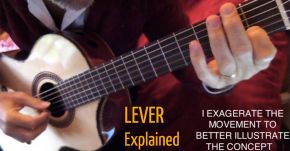
-Pivot and Level
-Right Hand
-Using open strings
-Combined forms
-Longitudinal presentation
-Presentation of the Left Hand
-Simple forms
-Thumb
-Transversal presentation
-Arpeggiated chord
-Barre
-Finger 4 muscle
-Over Practice
-RSI
-Scales and speed
-Special barre
-Finger 4 muscle
-Over Practice
-RSI
-Special barre
-Scales
-Setup
-Octavated harmonics
-Scales
-Setup
-Speed and sincronicity
-Carlevaro used a small cushion
-a fragile built person.
-The guitar moved too much
Beat
the pulse 
musical sound
Tempo
Meter
Whole note 
Half note 
Quarter note
Eighth note 
Sixteenth note 
flags
Rest
measure rest
Dotted Notes
Time Signature
Meter Signature
simple time
compound time
Note or tone
Semitone
Staff
Leger Lines
Clef
Sharp
Flat
Natural
Interval
A musical sound
tone quality
Tonic
mediant
dominant
major triads
erfect fifth 
major third 
minor third
-Sitting position
-A faulty sitting position
-faulty technique
-poor musical expression.
-The left arm
-hand and the fingers
-Carlevaro will never refer to fingers
-arm-wrist-hand movements a
-muscles of the upper torso and legs.
-to attack the strings at the correct angle
-the wrist
-raise or lower the guitar
-A correct sitting position
-3 points of contact
-the guitar and the player
-5 points of contact
-3 points of contact
-The curved shape on the lower side

-stability
-fingers at a 90 degrees angle with the strings.
-Carlevaro played at 90 degrees
-an unpleasant sound.
-The type of nail
-to fit the upper part of the left leg.
-twist your upper and lower torso.
-Your right arm will tend to cover the upper side
-elbow up and dumping the guitar sound
-see the sixth string.
-the guitar points upwards
-strings to be visible.
-The lower curvature is totally ignored
-the guitar makes contact on its inner ring.
-lumbar area is relaxed
-the right shoulder.
-Body movements
-the balance of the instrument.
-the left hand and arm."
-The feet are the main motors.
-The right foot comes into action
-restore the equilibrium.
-Avoid all tension to the spine
-the right arm is a point of contact in itself.
-The right arm will work like a pendulum
-Sit with the guitar
-fluidity of playing
-less muscular tension.
-Sitting correctly
-learn Cavatina.
-The video will help you

In depth view of the right hand:

-The right hand creates a unit with the left hand
-playing mistakes
-the right hand.
-both hands
-Guitar is about sincronicity
-the right hand.
-to look at the right hand
-the right hand in a mirror
-the left hand
-fingering
-memorization process
-mistakes in concerts 100%.
-The placement of the guitar
-the correct placement of the guitar
-the shape, thickness, hardness
-flexibility of your fingernails.
-Your body size
-fingers length
-personal taste
-the point of contact
-how deep I allow the guitar to fall between my legs
-different degree of perpendicularity between string and finger.
-the thumb gets  in the way of the index finger.
-The sound I produce is very sweet
-consider this approach
-lute type of renaissance pieces.
-my "standard position",
-produce a "round" sound
-no interference between the thumb and the other fingers
-position for most Baroque music, Preludes and Bourrees
-keeps the tendons in the right hand tighter
-speed in Spanish and Southamerican music.
-flexibility among these 3 position
-the wrist forms a bridge to adapt
-downward angle.
-the thumb is kept straight
-circular manner.

Right hand fingers point of contact with the strings and moving parts

-play a strings
-feel the string with the flesh right
-struck the string with the nail
-double action
-the note being played.
-the flesh stops the string from vibrating
-produce a new sound
-clicking sound when you play
-recordings.
-Feeling the string
-keep the right close to the strings
-squeeze 4 strings
-right hand fingers
-angle created between the string and the nail
-angle of attack.
-canals formed on the fingertips
-point of contact
-quality of your sound. -
-Your nails
-angle of attack.
-prevent the nails from hooking
-feel the string with the flesh.
-The muscles and tendons
-main joint
-the main knuckle
-the most effective muscles for the job
-close the fist.
-ready position.
-keeping the tendons tense
-bring the fingers back
-relaxed position after work.
-the attack sequence broken down in 4 parts.
-finger moves from the root
-fist like motion.
-the video that shows the attack at normal playing speed.
-The muscles and tendons
-move a finger from the main knuckle
-the palm side of the forearm.
-movement comes from the palm of the hand
-the main muscles in the forearm
-Spanish music and tremolo.
-sound production possibility.
-Try both attacks
-your hand will be drained of energies faster.
-playing apparatus
-nuances of guitar playing.
-the concept of Fijación
-create larger muscle groups.
-to detach a note from the rest in either a chord or arpeggio.
-fingers pattern
-heading towards fatigue;
-tension
-example below, taken from Cavatina,
-unit of fingers.
-Freeze the fingers
-Release the pressure on the strings
-keeping the shape of the chord
-using the muscles
-base of the fingers
-Fijación - fixation- (anatomical figure to the left)
-Push the fingers
-the fingerboard
-swift move of the arm.
-practice the concept of fijación
-the arpeggio sequence.
-a plays the melody
-the rest stroke
-movable parts
-mass (therefore its volume)
-play the accompaniment
-normal free stroke.
-The arpeggio
-fourth position.
- fourth position
-a perfect technique.
-feeling every muscle movement
-your body and brain.
-Professional memory
-3 great quotes by the Uruguayan master:

About playing relaxed

-muscles will be working
-practicing or performing.
-The professional player
-the muscles necessary to perform
-muscular fatigue which,
-poor sound
-poor performance.
-total or partial state of relaxation.
-degrees of muscular tension and relaxation
-tremolo
-partially relax the fingers
-work of the fingers
-main cause of muscular fatigue
- how much muscle use is tension
-down to the point exercises
-both hands.
-exercise routine
-acquire a given skill.
-Independence of the right hand fingers
-Move the accent to any right hand finger
-Change position on the fingerboard without producing undesired noises
-Learn how to present the fingers in position B* on the fingerboard
-Put to use the concept of fijación

Position B (Transversal presentation*) of the hand for the exercise.

-The five stages
-The fingers are pressing on the strings
-the weight of the arm
-Tilting the guitar
-benefit from gravity
-the wrist bending
-fingers almost parallel
-the first arpeggio
-release the pressure
-change of position.
-prevent squeaks from happening.
-second position.
-The fingers press on the fingerboard...
-going from the first position to the fifth and back.
-(4 formulas)
-technical challenges
-the right moves.
-your right hand into an obedient, smooth machine.
-a handful of incredible exercises a
-play them perfectly.
-speed

About sound production

-guitar playing:
-fear of mistakes
-a "miniature orchestra",
-Hector Berlioz.
-the key function of the right hand in the process of sound.
-Sound and personality
-The concept of sound and color
-the trained ear,
-our palette of sounds.
-many tonalities.
-the whole tonality issue is core.
-transcribed music.
-The performer has to think sound
-the performer is mediocre.
-our right hand.
-base sound.
-our artistry.
-free stroke.
-lowering or increasing the volume
-create contrast.
-more or less brightness,
-more or less depth.
-Our right hand

The Thumb part 1

-amazing stereophony
- The  size of the muscle
-the muscles of the other fingers.
-The correct use of this muscle and its tendon
-different sounds.
-produce a 4th sound
-sound issue concerning the thumb.
-base position.
-fast thumb position.
-higher speed.
-special thumb 1
-heavy sound in certain passages.
-the nail attacks
-upward curvature with the finger
-the thumb and the index finger
-special thumb 2,
-pure flesh stroke
-contrasting counterpoint
-clear cut sounds.
-musical decision

The thumb part 2

- 4 thumb sounds
-your technique,
-Pizzicato
-Sordino
-effects
-imitate the pizzicato sound of the violin.
-Schubert strings quintet op. 163
I-standard pizzicato.
-play the note with the flesh
-dampen the sound
-type of pizzicato
-the broken sequence for pizzicato 1.
-The complete attack
-circular motion.
-dampen the sound
-The whole sequence
-the outer part of the hand.
-harmonics
-musical situation.
-standard pizzicato.
-slower musical passages.
-deafened sound.
-sound effect.
-The outer palm is
-thumb in fijación.
-In traditional guitar scores
-achieve a new skill
-"making your own exercise"
-different sounds to the bass,
-different degrees of fijacion,

On the index, mid and a fingers

-different sound-colors and volumes
-the different attacks
-movements are taken to an extreme
-a broader palette of colors and volumes.
-The term attack

-Mid Joint attack

-The mid joint attack
-light sounding passages.
-somewhat thin and
-a lot of hooking going on.

-Main knuckle attack

-The main knuckle attack
-the most efficient set of muscles.
-perfect sincronicity between a, m and i,
-tremolo, arpeggio and chords

-Whole hand attack

-the whole hand attack.
-arm and shoulder.
-rotation of the forearm.
-note in the melody.
-base stroke with fijacion
-rest stroke,
-the attack on a string
-Jesus joy of man's desiring
-fijacion in a, m and i,
-slice sideways through the strings.

-Making a sound stand out ...

-work alone and in isolation
-secondary noise
-a fast attack to the string.
-the nail makes contact
-speed of the attack
-volume produced.
-muscle mass
-the mechanics of fingers
-total control.
-your right hand technique,
-The playing apparatus
-groups of muscles and tendons.
-sound.
-fine tuning
-artistic sound.
-Creativity in the technique
-how to create his own technique.
-Good teachers
-the thumb sequence
-different muscle groups for a, m and i...
-The different attacks
-the traditional school of guitar
-sweet sound.
-subtle adjustment of muscles and tendons
-"bridge-like" the sound.

- Notes in chords

-passage in Vila Lobos Prelude 1
-how to make a certain note stand out in a chord.
-the master of your fingers
-combining these 2 techniques
-Bringing a finger out more
-plucking the strings
-different positions
-chords and arpeggios.
-a number of great exercises
-acquire speed
-move a finger from one string to the other.
-jumps from string to string
-Feel the strings
-finger-riddles
-learning a new skill.
- Romance
-whole arpeggio
-bring out the main melody.
-a handful of the best exercises
-Jesus Joy of man's desiring, J.S. Bach
-Breath is musically synonym with relax

-The Left hand:
-the word tired
-left hand
-the most widespread error of them all
-think fingers
-to present the hand and the fingers
-Presentation
-very used word in South America
-When applied to the left hand
-press the string.
-an efficient use of the left hand
-precise and noiseless
-squeaks
-orientation with relation to the frets
-presentation of the left hand can be simple or combined.
-Simple forms:
-Longitudinal:
-chromatic scale
-fingers are parallel with respect to the frets
-scales
-The left hand thumb
-pivot
-pressing the strings
-pivoting thumb.
-the shape and distribution of the hand and fingers
-right hand fingers stay the same
-wrist articulation
-The wrist
-movable bones
-playing the chord
-transversal presentation
-fingers are perpendicular with respect to the frets.

-Combined forms
-simple forms
-very special challenge
-different set of synapses
-combined form
-Cavatina.
-The Barre
-simple longitudinal presentation
-simple transversal presentation.
-Left hand thumb:

-contact point
-opposition
-participation of the thumb,
-totally liberated
-directly opposing the fingers
-vibrato and
-fast/very fast scales
-The position of the thumb
-musical passages
-left hand
-position changes
-the thumb
-fingers 1 and 3
-position changes
-scales
-leftward position changes
-rightward position changes
-avoid tension
-how much pressure or energy is really necessary to play
-overusing the thumb
-play without a left thumb
-forget tempo
-the best way to play a musical phrase
-healthy balance

- thumb and finger 1
-the left hand thumb
-the purest way to do music
-a single note
-a scale or solo
-violin and strings players
-play scales
-lines of melodies
-the chords world
-the curved baroque bow
-show off with scales.
-natural context
-polyphonic players in general
-Piano players
-sustain
-The Bach piano partitas
-Glenn Gould
-Segovia was right
-transcriptions
-serve the music

-Guitar players
-playing as fast
-the classical music elite
-the fastest classical guitar player alive
-repertoire
-Humphrey with the elevated fingerboard
-Canadian pianist Glenn Gould
-Steinway lowered to play a faster Bach.
-Paganini violin caprices
-achieve these speeds

-Chaconne
-Segovia's debut of the Chaconne in Germany
-Decca recording of the Chaconne
-all time greatest achievements.

-the steps to play scales
-push their speed up
-speed for classical guitarists
-electric or acoustic guitars
-string tension
-flamenco guitars
-magic illusion.


-Exercises
-guitar method
-pillars of master technique
-Arpeggios
-Scales
-Tremolo
-precision
-independence of the right hand thumb
-mastering a musical instrument


Home | Biography| e-m@il | Site mapGuestbook
| Visitors Comments |DVDCDs, DVD & VHS | Renew

Copyright ©,
all rights reserved 1997-2007
mangore.com 10th anniversary
 

Copyright and terms of use
##########