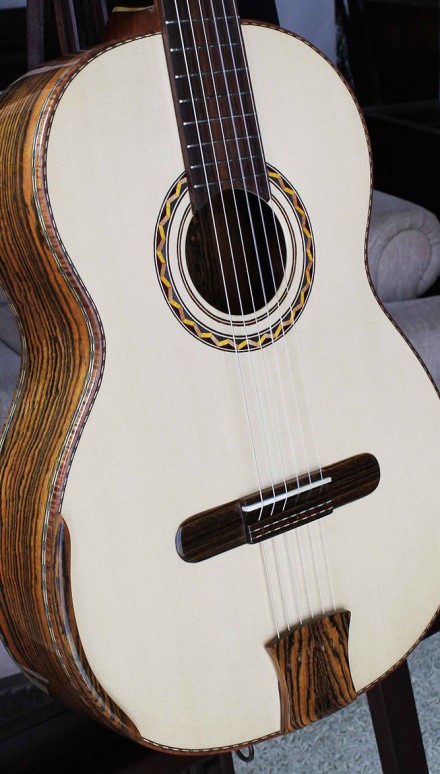
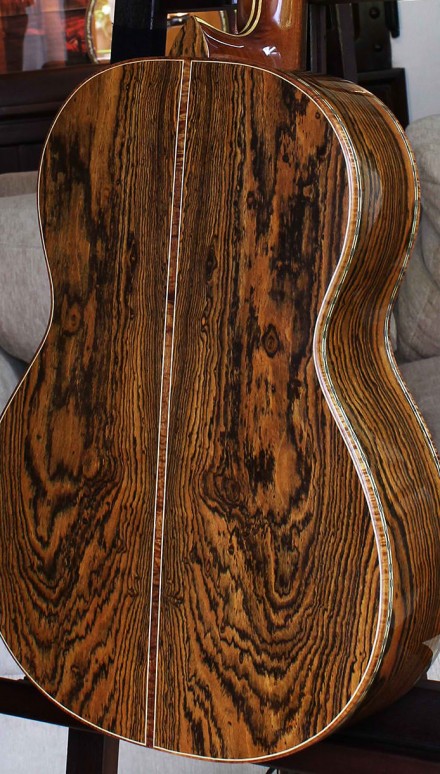
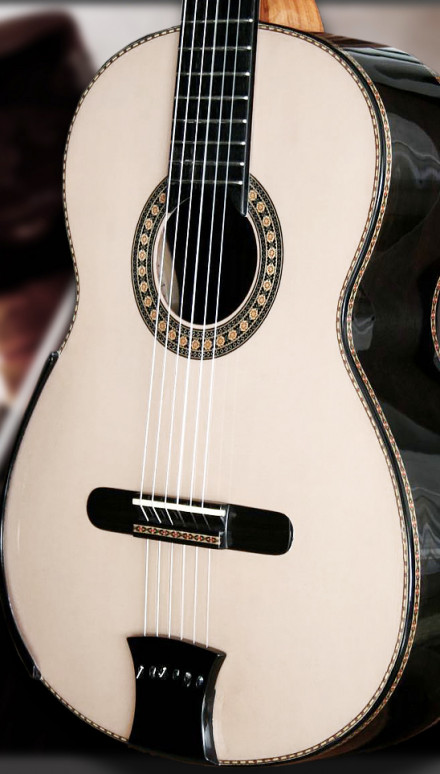
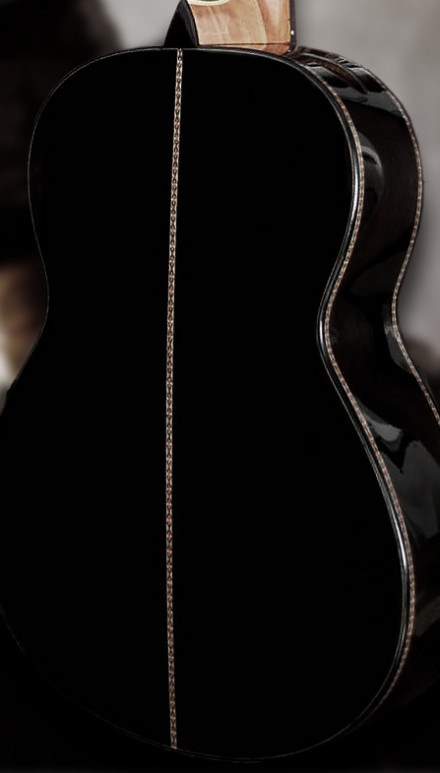
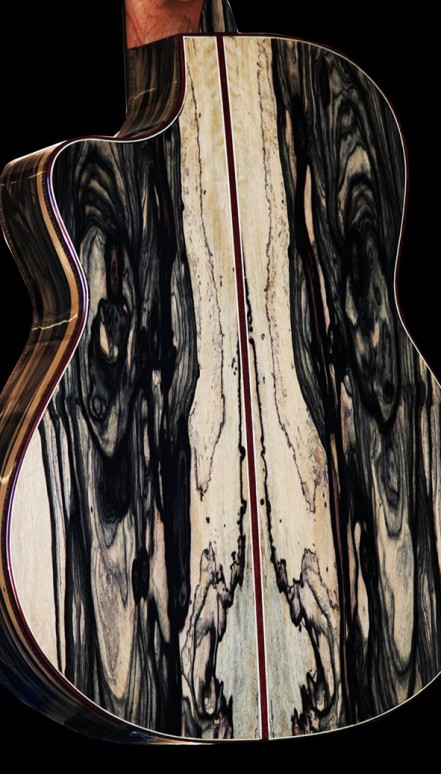
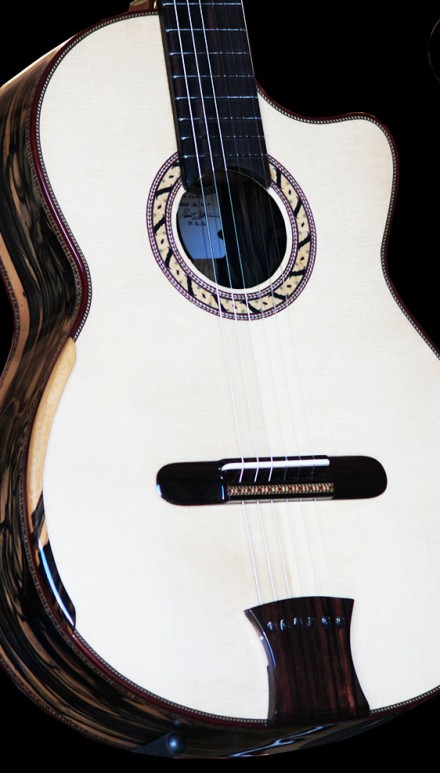
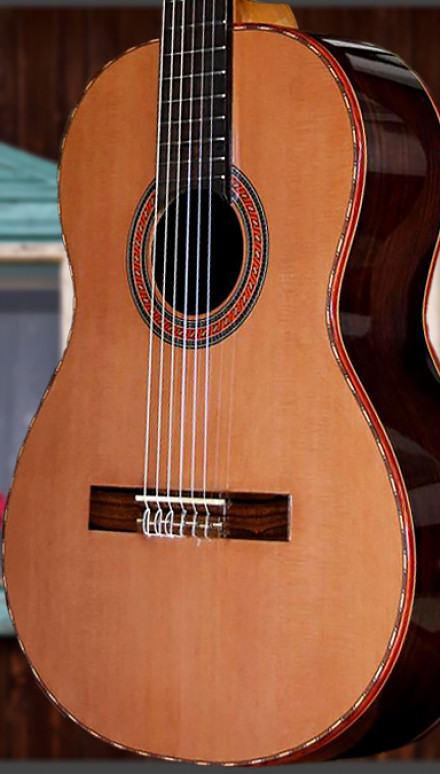
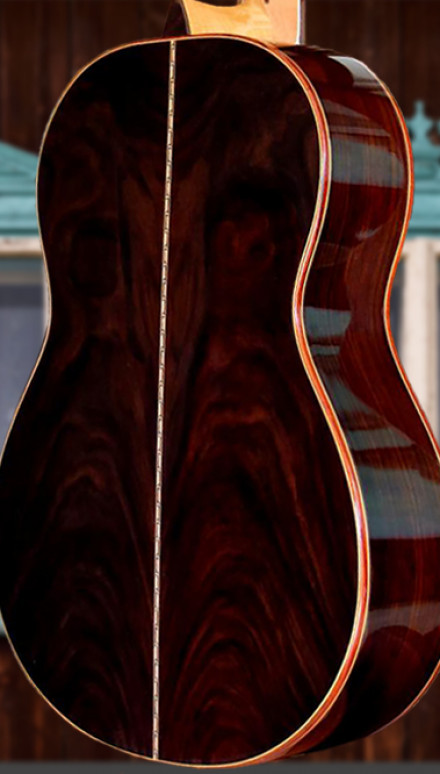
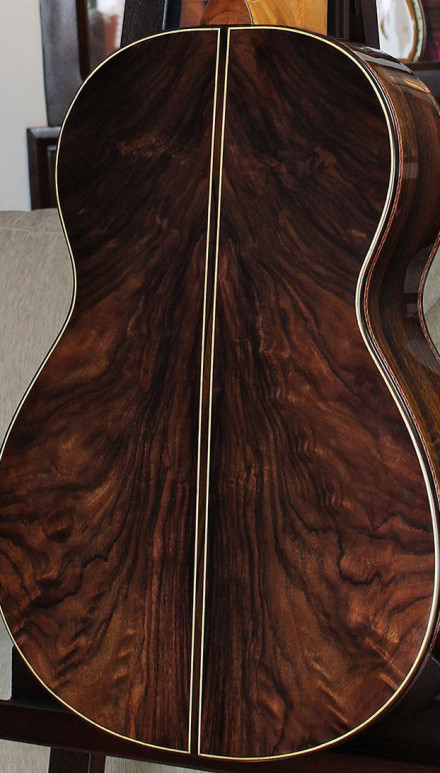
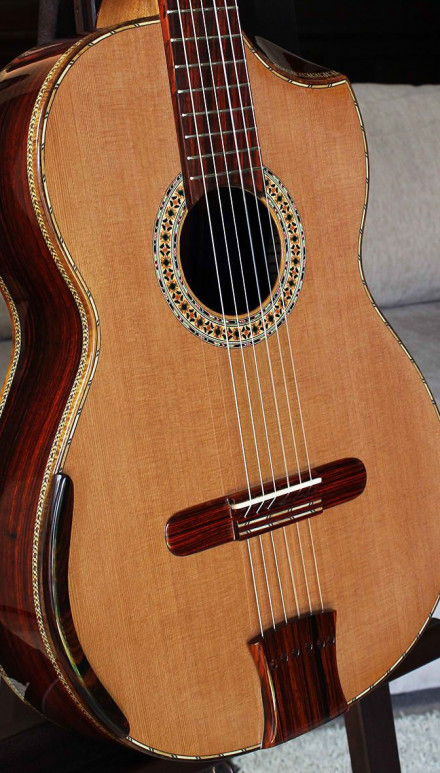
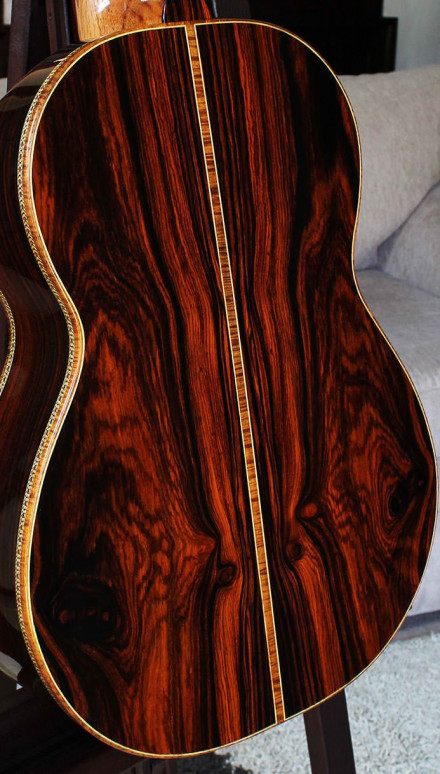
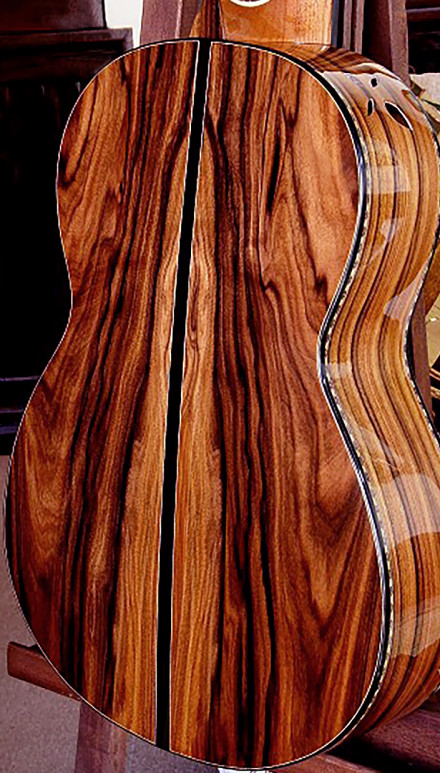
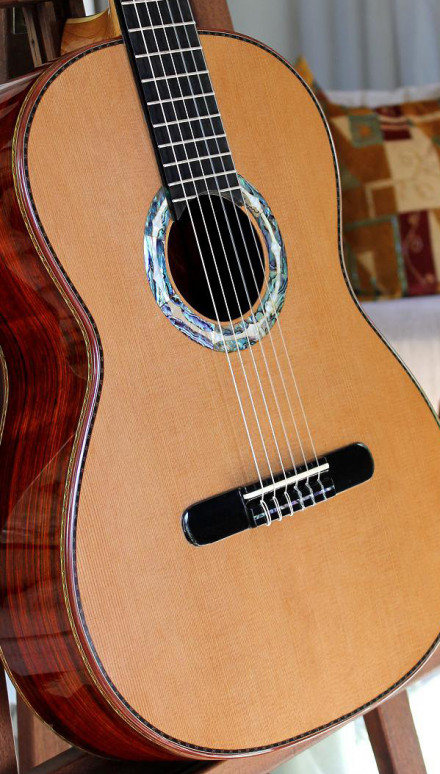
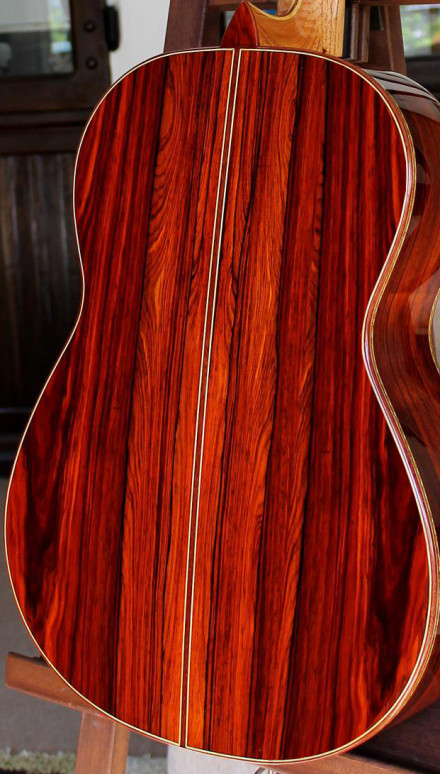
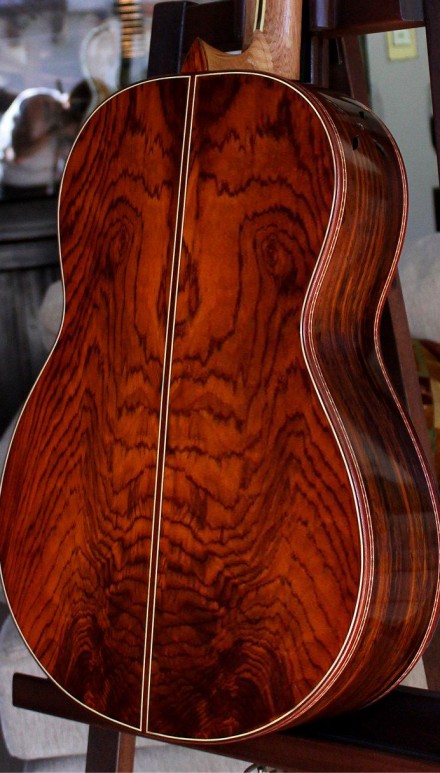
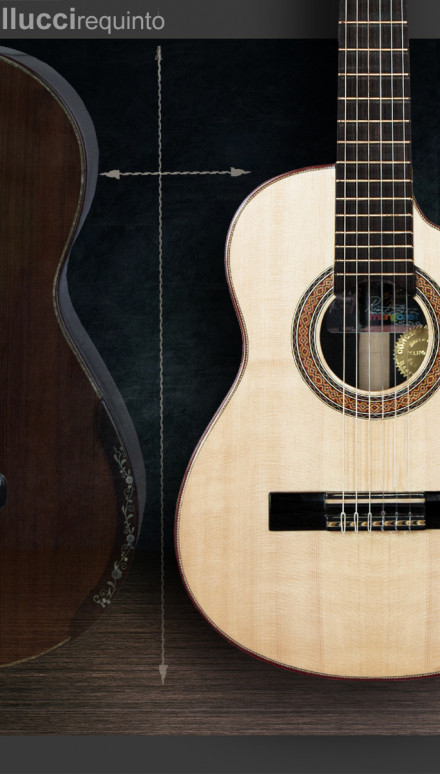
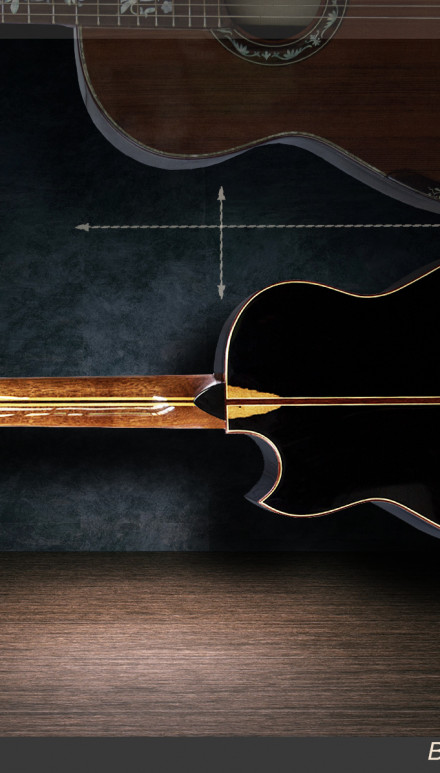
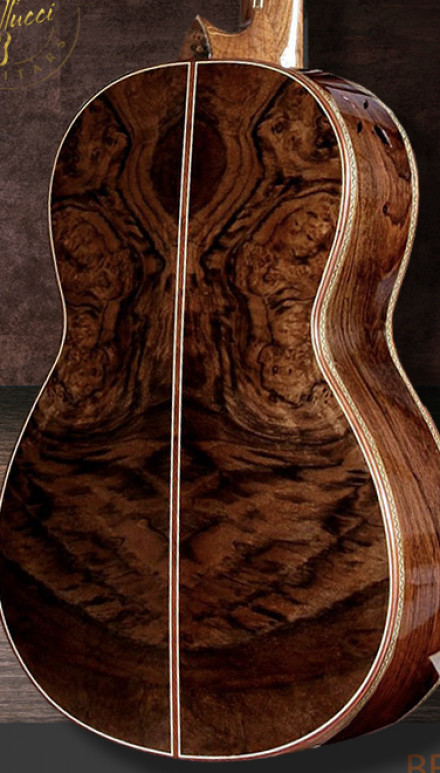
Aged Brazilian
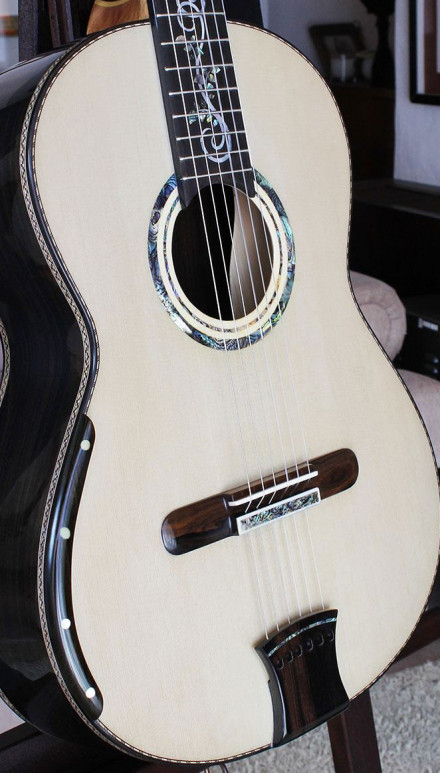
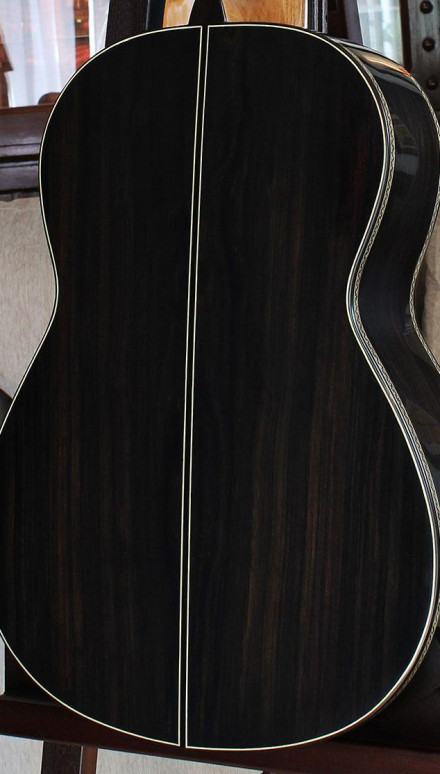
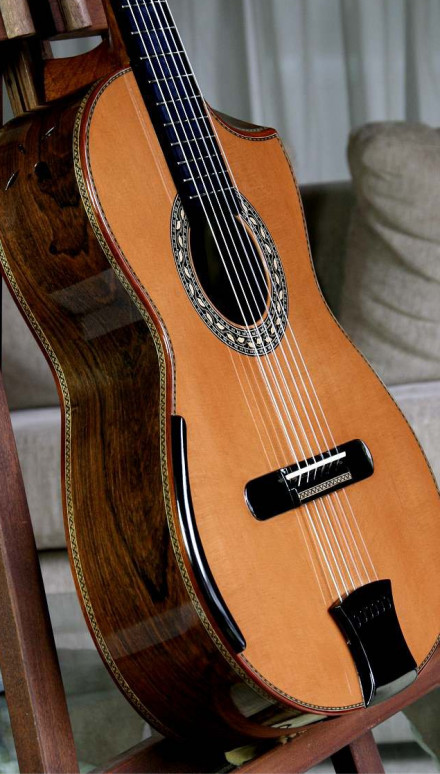
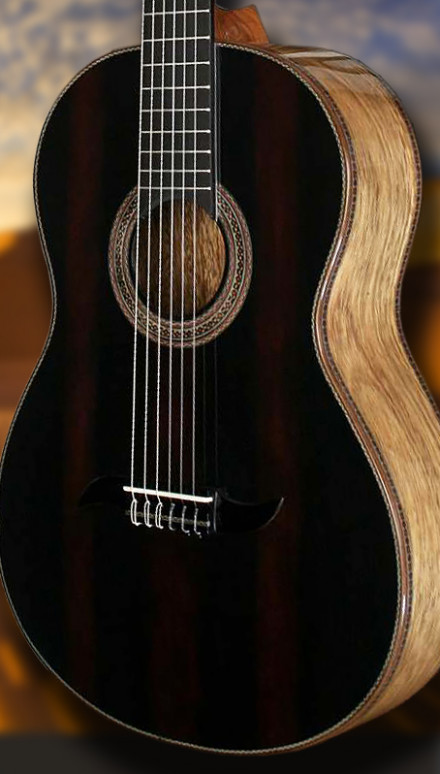
Rosewood B&S, Special Hauser braced Maple
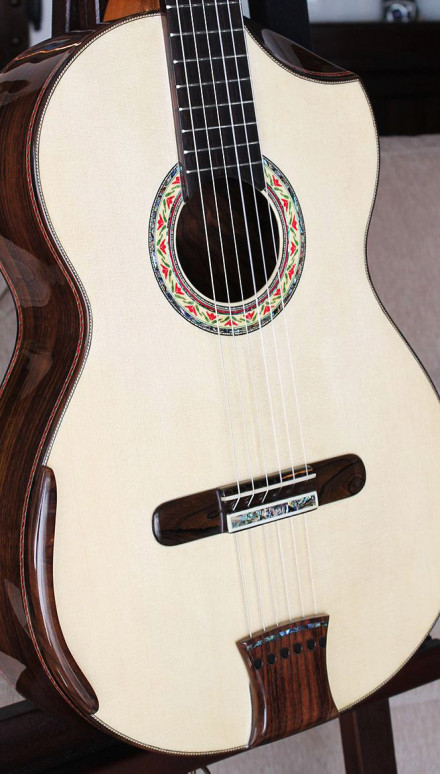
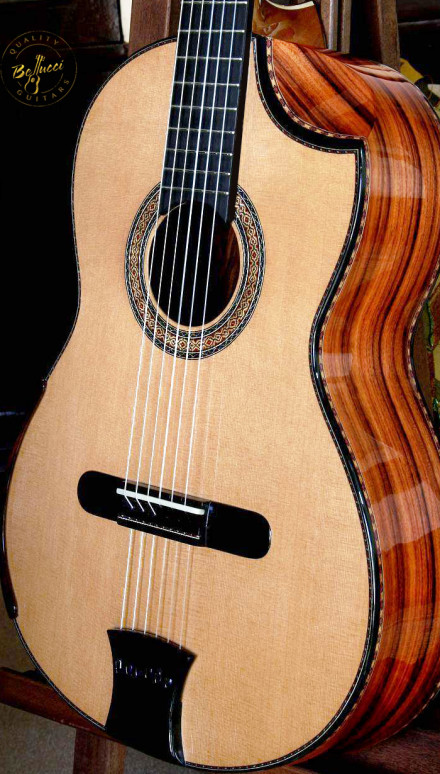
top, 640mm, 16" radiused Ebony fingerboard,
Mother of pearl details on the Ebony bridge, violin tie and Rosewood headplate.
African
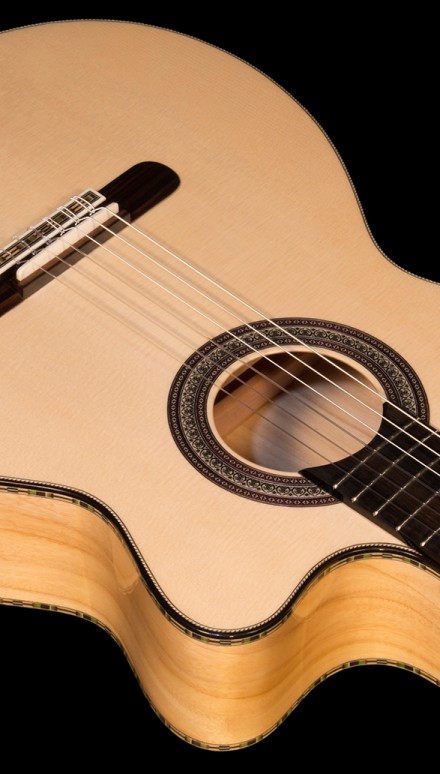
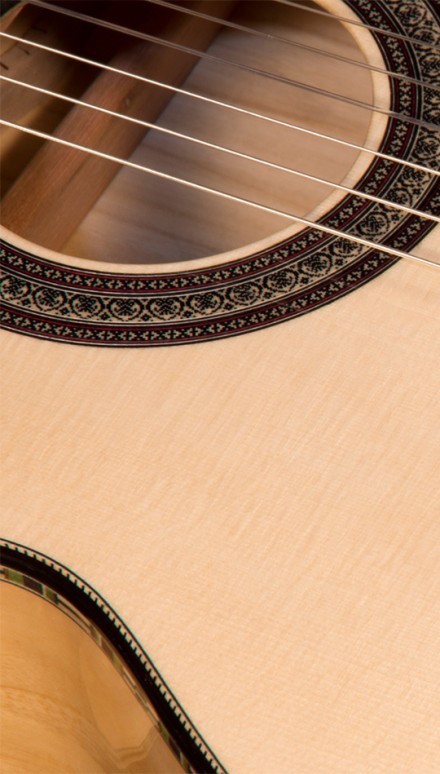
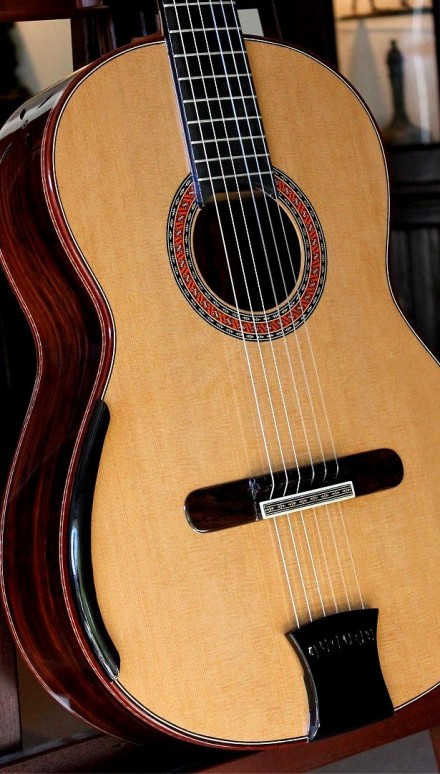
Walnut bindings and luxury marquetry on all sides. 2 "F-holes",
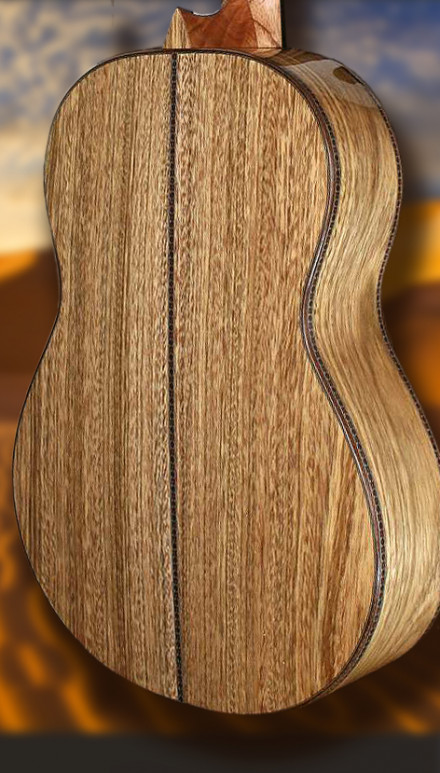
Zebrawood
buttons on the gold plated tuners, 21 frets,
triple
neck wood decoration/truss rod, Exclusive hand crafted leather embossed
leather case included. Special Cutaway Masterpiece !
Allow
me to introduce the first Da Vinci Series Bellucci guitar. The birth
of this new series is the natural maturing result of a series of wonderful
circumstances that added up to the creation of this amazing masterpiece.
One of the main influences in my career as a guitarist was the Uruguayan
maestro Abel Carlevaro. The man was a genius in the way that he approached
technique and pushed guitar builders to expand the horizons when it came
to guitar construction. Manuel Contreras II worked with Carlevaro in the
creation of a special model called Contreras/Carlevaro. I owned one of
these instruments for many years and it is a sensational instrument.
It is the result of many years of experience and Carlevaro had always wondered
why the sound had to be forced out of a single hole which was not even
placed near the most powerful sounding part of the guitar (the bridge area).
He opted for a soundport that surrounded the whole instrument. In the picture
to the left where I hold my Contreras/Carlevaro, the soundport is
the
dark area all around the top that looks like a black binding. The idea
was that the sound would be more balanced because it picked sound waves
produced in different areas of the body. I worked with Carlevaro for over
3 years and I told him that in a sense, the violin style F holes would
have achieved a similar result. In one occasion he told me "Habia pensado
lo mismo" (I had a similar idea). Since I started building guitars, many
players asked me to build a Carlevaro style guitar and I would answer that
I was "working on it"... well today I finished what I consider would have
been the natural evolution of Carlevaro's ideas and I am tremendously proud.
The guitar sounds almost exactly like the Carlevro/Contrears only that
it has more presence in the bass. The clarity of the sound is beyond words
and as I play Cavatina I am amazed at the clarity of the trebles and the
superb separation of voices. The power in her voice is amazing and considering
that she is fresh out of the lacquering booth, I can only imagine what
she will sound like when the sound starts breaking in. The first string
is one of the best I ever heard. Clear, powerful and full of life. I do
not use the appoggiato (rest stroke) to bring out the melody, the guitar
does all the amplification work for me. Maple was my #1 choice for
the top because it is a tremendous tonewood with a figure to die for. In
the center of the soundboard, the Quilt is so wonderfully bookmatched that
it resembles a jewel box. Maple allows for the intricate work required
in making the large F Holes. She marks the beginning of a new line of Bellucci
guitars that will introduce ideas on a regular basis. The search for the
elusive perfect instrument one finds perfection and that the great
minds of all times have walked that path before.
-Friday
April 15, 2011:
I woke up
very early this morning.... somewhere around 6... I knew it was going to
be an especially laborious day because today marked the launch of a new
line of Bellucci concert guitars. This new venture was working in the back
of my mind to the point of getting me out of bed much earlier than usual.
I decided to call the new line "The Bellucci Da Vinci Series". I
have always been a very curious person and I have a very keen imagination.
When you take this to the luthery arena, the possibilities seem to be endless.
Instruments like the guitar are constantly undergoing change and innovation.
The new line of guitars will be centering about any and all type of evolution
that I bring about in the construction of classical guitars. This was the
case with today's first Da Vinci guitar: "Homage to Abel Carlevaro"...
Read more in my blog |
|
..
Hear "Cavatina"
 |
|
USD 4,300
Order this exact instrument clicking
below
DHL
Shipping:
USA 184 USD,
Europe
223 USD, Asia 278 USD
..................................................................
650
mm or 640 mm?
Keep the following
rule at hand: If the distance between the tip of your thumb and the tip
of your little finger is equal or less than 9 in. when fully stretched,
use 640 mm. In stringed instrument performance, a single millimeter can
mean the difference between playing effortlessly or the exact opposite.
Comments received since posting
her:
Elio
Beniamino Bogani from Italy: Stupenda!! Come la chitarra che mi hai fatto!!
Ne è valsa la pena!! ciao!
Jaco
Shaheen from Saudi Arabia
Diosnel
Herrnsdorf from Paraguay, Impresionante! Más tarde paso por
la página para escucharla...
Thedy
Agustín Cabral from Paraguay, jojoi que buena esta Renato... como
se la puede provar
Fernando
G.Gamma from Brazil, Linda!!!!
Edgar
Kush from Bolivia, que bonita
James
Lyon from the US, Very beautiful |
Hauser 9 braces 3 woods fan
The 9 braces Hauser fan is
the most thoroughly tested fan brace setup on the planet. It is the result
of many years of experimenting. It is braced on Torres 4 fan brace design.
The braces act as sound vibrations highways...they carry the vibration
of each string to a specific spot on the soundboard. If you put your fingers
on the soundboard as you play the 6th string for instance, you will feel
the upper portion of the top vibrate with more power than the rest of the
top. You will be able to feel this vibrations with your fingertips
all the way to the 4th strings. It is harder to feel the vibration caused
by the treble strings. The variations on the 9 braces fan is enormous.
Luthier taylor each fan to achieve a specific sound and match the instrument
with the rest of the woods used in the construction. Above to the left
is a 9 braces all Spruce fan. I often use a mixture of Cedar, Spruce and
Mahogany to match different wood combinations Image to the right.
Radiused or flat fingerboard?
The radiused fingerboard has been
around the acoustic and the electric guitar since day one. The same is
true for most instruments of the Stringed family of instruments (violas,
violins cellos, bass). Radiusing (image above) makes barre and left hand
stopping A LOT easier. The only drawback is that you will NEVER want to
play a flat fingerboard after that. If you are having your custom
guitar built, I am all pro radiusing the fingerboard. The standard
fingerboard is flat.
|
-Aged Brazilian Rosewood B&S
-Quilted Maple top
-52mm nut
-640 mm scale
-Special Hauser Bracing
-Exclusive strutting (partially
visible through F holes)
-Mixed wood bracing style
-Gold plated tuners with Zebrawood
knobs
-Ebony armrest, tie and bridge
-Pearl details on bridge, tie and
headplate
-21 frets
-special cutaway
-16" radius
-Ebony fingerboard
-hand crafted luxury marquetry
-triple neck reinforcement truss
rod
.
.
. |
Request the Signed POSTER
23.6 in X 51 in
|
|