Back to Top

Carlevaro Technique
The Thumb Part 2
Standard Pizzicato
Once the previous thumb sounds have been incorporated in your technique, or as you incorporate them, you might want to consider the following sounds or effects: Pizzicato [pit-see-KAH-to] -to pinch-, and Sordino [sor-DEE-no] -to deafen-. These are often misnamed effects and one is often confused with the other. Namely, sordina or sordino is often confused with pizzicato. These are sounds that originated with the violin (viola, cello...) and the idea is that the violinist uses the fingers instead of the bow to produce the sounds. What the guitarist is supposed to do is imitate the pizzicato sound of the violin. Since the violin is a bowed instrument, its resonance, when plucked with the fingers, is practically null. That is the reason we have to dampen the sound a few instants after producing it.
In the Animation below you can see my standard pizzicato. This is the one I use most. What I do is play the note with the flesh (sometimes with the nail) and dampen the sound a few instants later. Depending on the type of pizzicato I will dampen it faster or slower. Good taste and personal preferences are usually the best way to decide how fast or slow the dampening will occur. Generally speaking, this type of staccato is preferred in faster musical passages. In guitar scores the way to indicate pizzicato is by either writing pizz. or by placing a dot on top of the note (s) to be damped.
Following is the broken sequence for pizzicato 1.
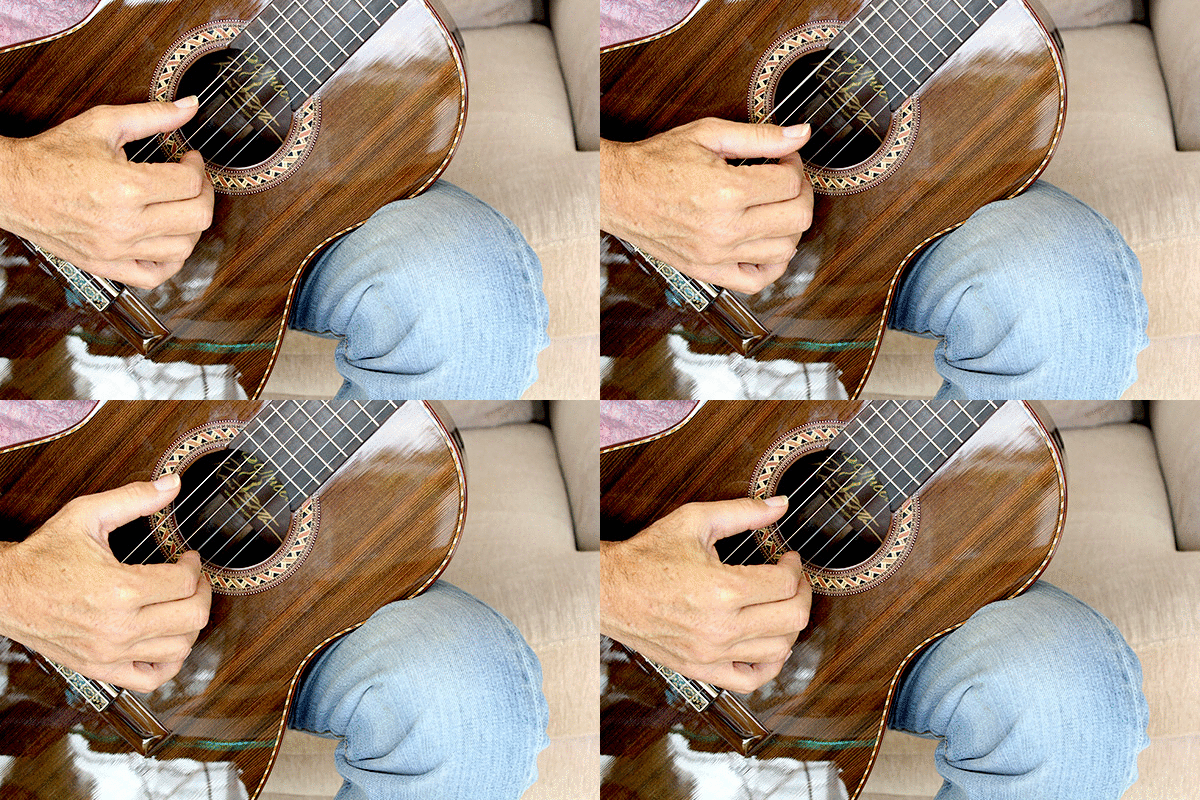
In teh animation you can see how the thumb is pressing on the string with a downward-outward force. The force is then interrupted and the thumb starts its upward motion. The complete attack is actually a circular motion. All the forces are nulled and the finger drops to dampen the sound and get ready for the following pizzicato. The whole sequence lasts less than 1 second.
Special Pizzicato
The difference between this pizzicato and the previous one is that the sound is dumped with the outer part of the hand. This pizzicato allows the player to stop all the strings that might be resonating (harmonics). Again, the musician has to decide which pizzicato adapts better to a given musical situation.
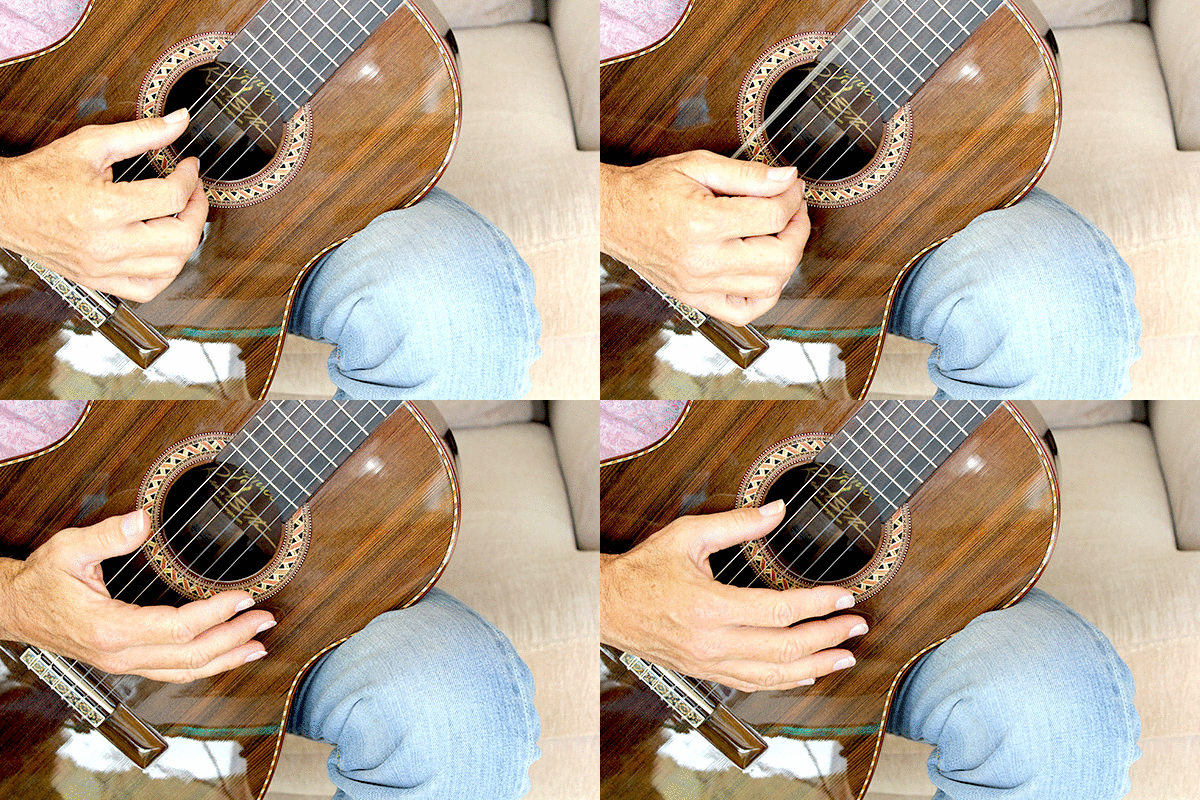
The sequence is exactly the same as the standard pizzicato. The difference lies in the use of the outer part of the hand to dampen the strings. This staccato is preferred in slower musical passages.
Sordina
Sordina, is a deafened sound. Remember that we deal with sound and all I am doing is explain how I go about achieving the sound effect. You can certainly add to the list of possibilities. The outer palm is resting on or right next to the bridge bone. The thumb plays the notes and the position of the outer palm will achieve a more or less deafened sound. In all these effects, the thumb is in fijación. In traditional guitar scores you will see the Italian word sordina to indicate the effect.
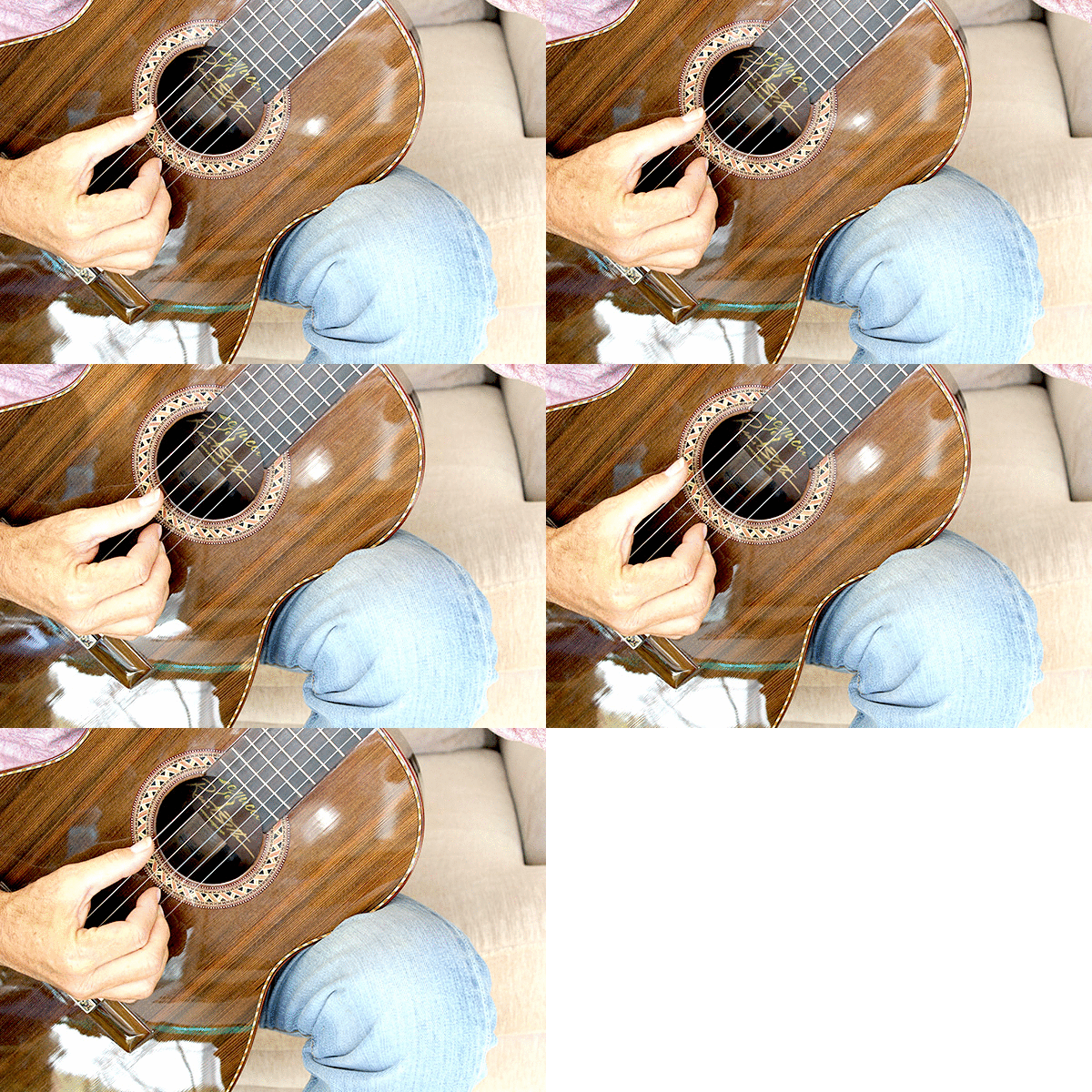
The best way to achieve a new skill or perfect one is to isolate it and work it separately. That is where the idea of "making your own exercise" originated. The exercise in page 2 is great in that it can be used to polish an immense number of rough technical spots. You can assign different sounds to the bass, use different degrees of fijacion, and definitely be very creative. Technique is a creative process and more than passive, it must be an active process. Understanding the process involved in each movement will teach you how to discover new possibilities or create variations to existing ones.
On the Index, Mid and A Fingers, Types of Attacks
Introduction
These fingers are responsible for creating the different sound-colors and volumes that make the amazing polyphony that only the guitar, as a single instrument, is capable of producing.
I will start describing the different attacks from the lighter to the heavier one. Keep in mind that in a way, these movements are taken to an extreme to make their mechanics as clear as possible. Again, there are degrees for each one of them and they can often be used in pairs to achieve a broader palette of colors and volumes. The term attack when referring to playing the string, is quite eloquent. The origin: imagine being a string and seeing a huge "thing" coming at full speed on you.
There will always be some type of secondary noise whenever a finger attacks a string. The key to eliminate it or render it inaudible is by using a fast attack to the string. The core of the attack is the moment the nail makes contact with the string and the time it stays in contact with it. The speed of the attack has nothing to do with the volume produced. Volume must be the result of the muscle mass implied in the attack (Fijación).
As we go deeper in technique, we will realize that it is foremost important that the musician knows the mechanics of his fingers thoroughly. In the practice process we must analyze and take the time to feel everything that is happening. Practice MUST BE total control.
The playing apparatus can be seen as the sum of many different groups of muscles and tendons. The more muscles groups involved in producing sound, the bigger the sound. The fingers never lose their mobility, we will always need a degree of fine tuning to produce artistic sound. The last joint is the least controllable (the joint of the nail). It can be fijada to resist the string more or less.
Creativity in the technique assimilation process is of foremost importance. We often think "well, an Angel came from heaven and dictated the exercise(s) to the master". The ultimate master must learn how to create his own technique.
Good teachers definitely give a head start to their students, but once you understand the philosophy, you are pretty much on your own and the master takes a co-pilot role.
The different attacks discussed below have a direct influence on the volume, or body, of our sound. When it comes to color, the traditional school of guitar presents the displacement of the hand near the bridge (ponticello) for a harsh sound and a displacement towards the sound hole for a sweet sound. This will always be a wise and very useful technical solution, but it is not the only one and music often presents situations where we need a mixture of sounds and moving the hand around will not solve our problem. It is here that a very subtle adjustment of muscles and tendons comes in very handy: The angle of the last joint. The smaller the angle formed by a finger's last joint and the finger, the more "bridge-like" the sound.
Mid Joint Attack
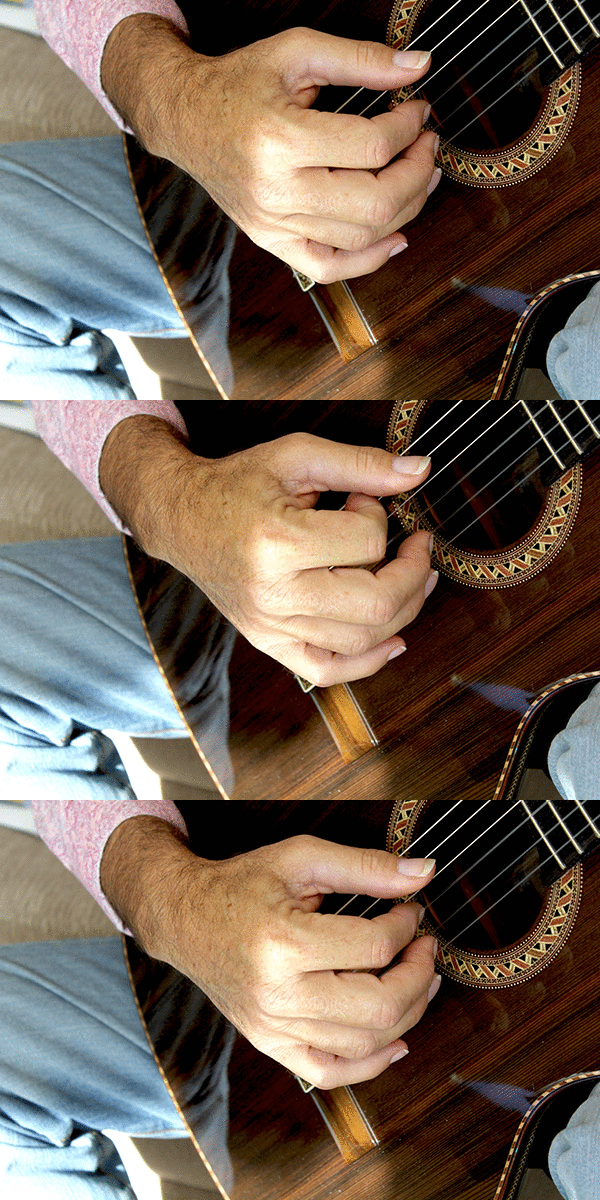
The mid joint attack is usually the first attack (and sadly often the only attack) that not properly coached new comers to guitar use... This attack is used for high speed light sounding passages. When this sound is used, the thumb is probably doing center stage. The sound produced is somewhat thin and, unless the fingernails are perfectly filed, there will be a lot of hooking going on. Below is the animation.
Main Knuckle Attack
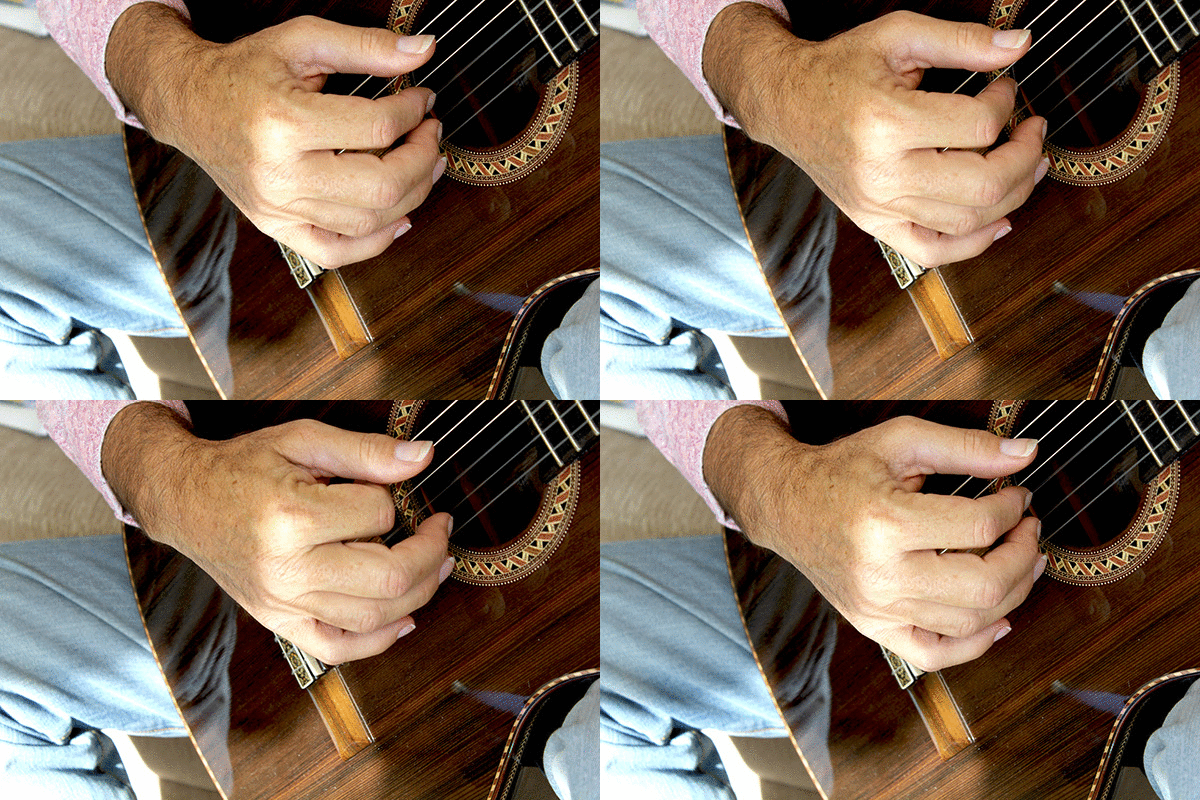
The main knuckle attack is the most versatile because it uses the most efficient set of muscles. One to make a fist. The beauty of this attack is that if it is used in perfect sincronicity between a, m and i, tremolo, arpeggio and chords acquire a special depth and fluidity. This is the attack most used by top musicians. The right mixture of this attack with the previous one makes for the ultimate playing machine.
Whole Hand Attack
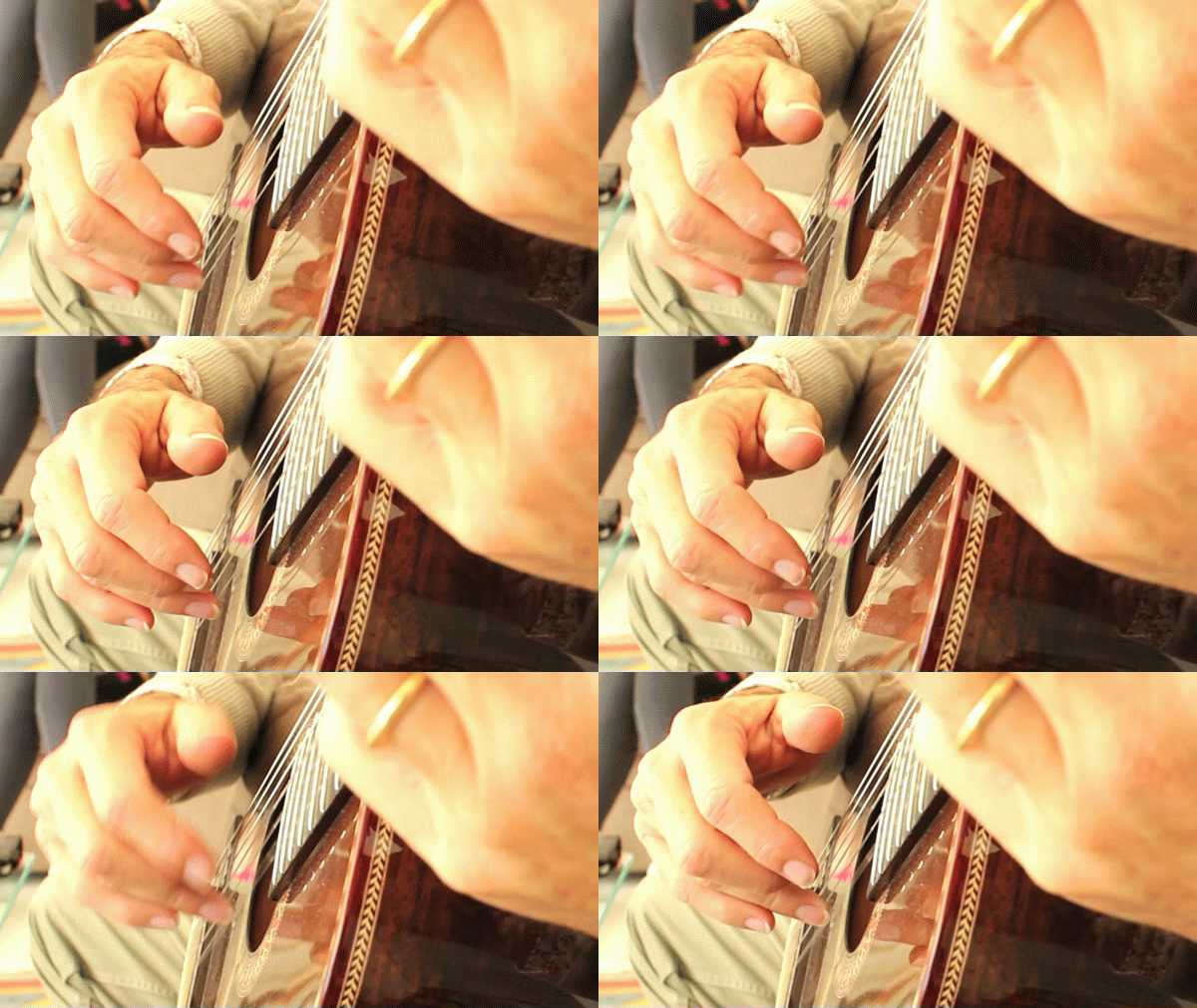
Below is the whole hand attack. Actually there is a participation of the arm and shoulder as well. The movement starts and gains momentum with a rotation of the forearm. The fingers are using Fijación. I use this sound to really stick out a note in the melody. I use it in Cavatina on the a finger (other times I simply use base stroke with Fijación). The end part of this attack can end in a rest stroke, (Carlevaro advocated this attack, not the rest stroke), I personally think that the attack on a string should never interfere on another string. Therefore I rotate the forearm and the adjacent string is missed altogether. I use this attack a lot when performing the arpeggiated chords in Jesus joy of man's desiring. What I do is use Fijación in a, m and i, rotate the forearm and slice sideways through the strings.
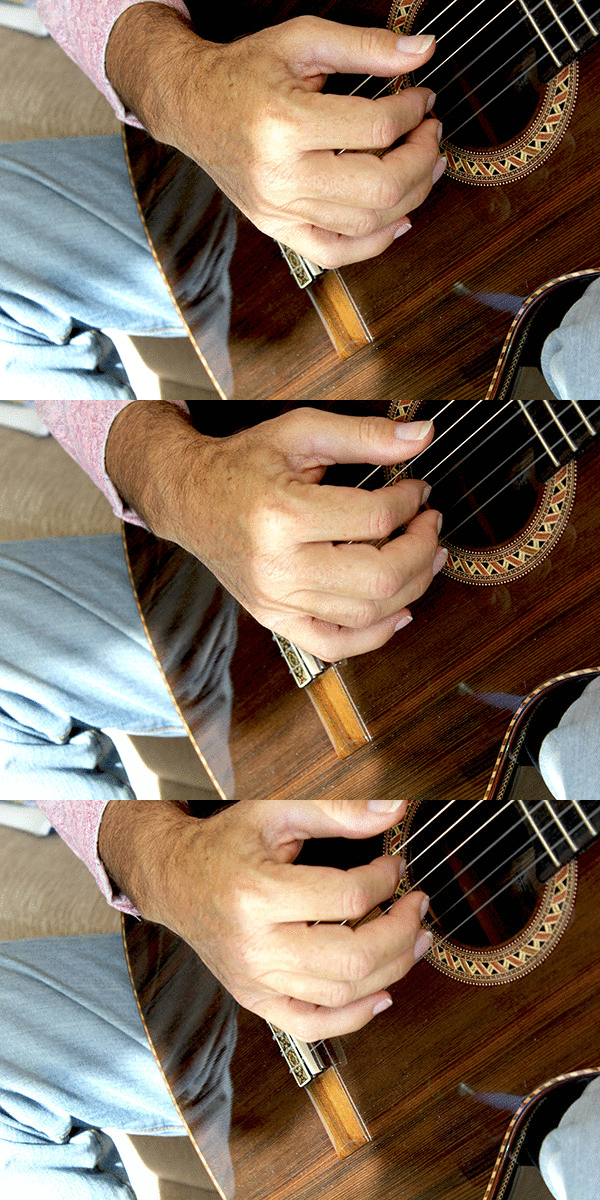
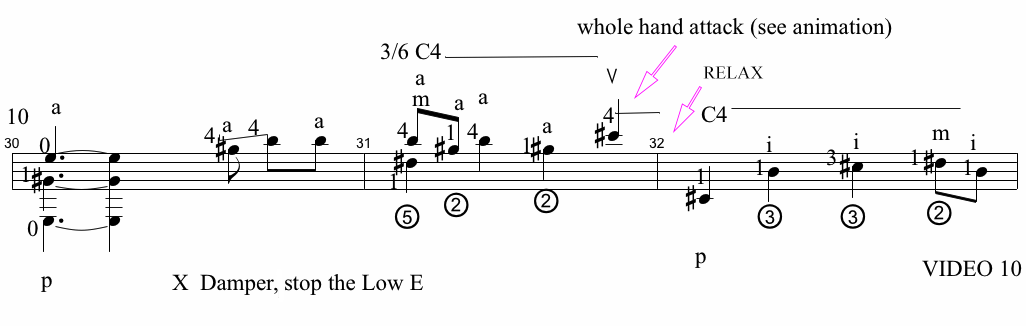
Below I use the Whole Hand Attack in measure 32 of "A Whiter Shade of Pale"
Animation:
Study "A Whiter Shade of Pale" with me here→
The continuation of this class is in the members area, become a member today.