Back to Top


Beethoven L.V., "Fur Elise"
Transcription and Fingering: Renato Bellucci
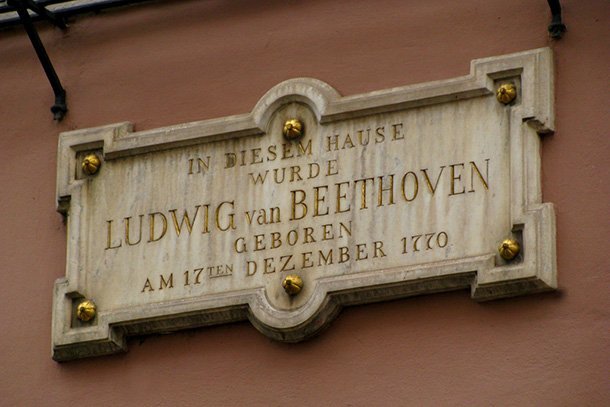
Beethoven was born at 515 Bonngasse, Bonn on December 17, 1770.
Fur Elise is probably the all time hymn to un-rewarded love. When Ludwig gave the song to Elise, she said "it sounds like a funeral song". As with most romantics, the image of the woman Ludwig loved in his heart, was not matched by the "real" woman he platonically loved.
Fur Elise is a Bagatelle, which is a short light-hearted piece of music, so, over dramatizing its performance is not what Beethoven had in mind although, being the sentimental person he was, he would probably stretch the style to Ba-a-a-gatelle according to his mood. This is probably the best known piece of music in the world which means that if you play it live, your audience will go "a-ha". The general public loves to hear familiar tunes and most professional musicians ignore this basic truth. This partially explains why most people are intimidated by the word "classical" preceding the word music. Performers usually do a great job at making the audience feel ignorant. The people you play for is king. Save those "sophisticated" pieces for those few geeks out there and aim at delighting your audience.
I arranged Fur Elise for guitar according to my personal taste and my knowledge of the instrument. If you have any objections, you can always go to the original score (left) and see if you can do better...joke. A big effort is being made by composers all over to get the guitar repertoire to a level where it is not dwarfed by the piano or violin repertoire. Though the effort is a valid one, it is also true that no matter what we do, we will never be able to say that Bach, Beethoven or Mozart composed for it. Andres Segovia went the extra mile asking the Mexican composer Manuel Ponce to write a suite and credit it to Leopold Weiss. I simply think we are lucky enough that the guitar can recreate most music without losing the spirit that brought it to life... actually, most times the opposite is true.
Beethoven, Original Score
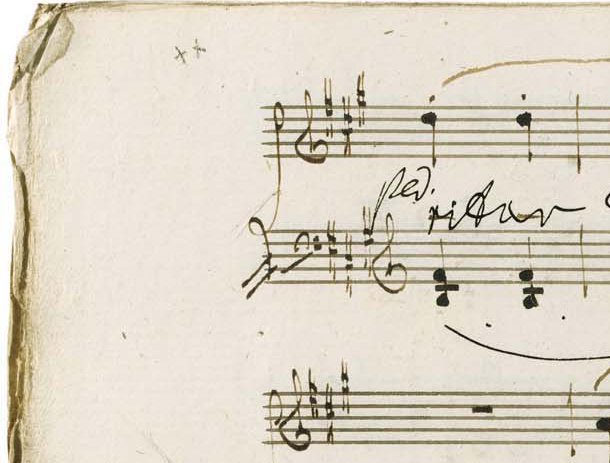
I arranged Fur Elise for guitar according to my personal taste and my knowledge of the instrument. If you have any objections, you can always go to the original score (left) and see if you can do better...joke. A big effort is being made by composers all over to get the guitar repertoire to a level where it is not dwarfed by the piano or violin repertoire. Though the effort is a valid one, it is also true that no matter what we do, we will never be able to say that Bach, Beethoven or Mozart composed for it. Andres Segovia went the extra mile asking the Mexican composer Manuel Ponce to write a suite (Suite in A) and credit it to Leopold Weiss. I simply think we are lucky enough that the guitar can recreate most music without losing the spirit that brought it to life... actually, most times the opposite is true.
Born on My Birthday, Dec 17
I will be uploading 1 staff per day with the fingering that best suites me and the technical thinking behind it. This is a piano piece and I recommend you hear a piano version first so as to catch Beethoven's spirit and decide wisely. Romantic composers were much more attached to the instrument they composed for than baroque composers. Still, I think that your knowledge of the guitar can overcome any challenge . I often say that if Beethoven played the guitar he would have still composed most of his music and probably would have not become deaf. Guitar Glossary needed in Fur Elise: 6a in Re Tune string 6 to D String number (Numer in a Circle) 1 2 3 4 left hand fingers (1 index, 2 meddle, 3 ring, 4 little) i m a p right hand finger (i index, m middle, a ring, p thumb) ] Repeat part A Roman numeral under an inverted L indicates fret or position Parts marked with the Roman numerals I, II and III are repeated constantly during the piece, so I'll simply refer to them as I, II and III. I use string 2 at the beginning because I like the sound of this string on my Bellucci Guitar. Try string 1 if you prefer. Hold the F in bar 5 until the D and then, "fly" to the A. Dragging the fingers on the nylon strings is ok because they produce no undesired noise. The slurs are optional as long as the accents and fluidity of the music are achieved without them.
Renato Bellucci plays: "Fur Elise"
Add to playlist
Staff and Video 1
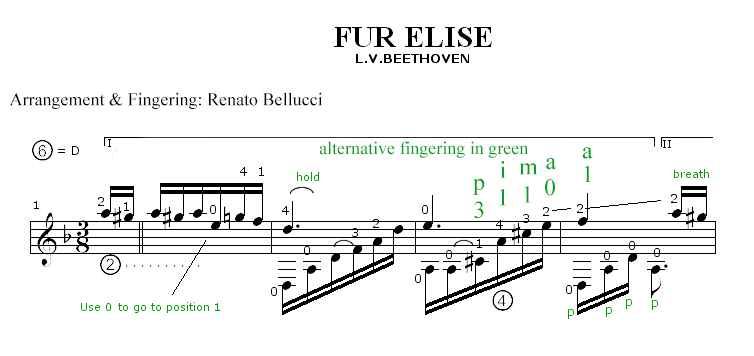
Analysis:
String 2 is ideal for the start although on some instruments string 1 is just fine. See the sequence of notes as phrases. Breath belongs there because a new phrase is about to begin. I have been using the alternative fingering in green with excellent results lately. Give it a try and decide for yourself.
Video 1
Asunción, December 23, 2012
The continuation of this masterclass is in the members area, become a member today.